Monday, May 11, 2009

How Classy is America?


We are divided into social classes in our society. Granted that these lines of class are drawn by the society itself, and everyone believes they're the middle ground, these classes still exist. I believe the angst, of "class wars" or unhappiness due to class, comes when a person is trying to change the status that they occupy. Those who seem to embrace their class rather than resist appear to live more comfortably. Those who transcend between classes, do so because circumstances allowed them to. A person who is trying to force themselves to a higher part of society without significant backing will simply alienate him or her self from their original group and will still be viewed as an inauthentic member in the opinion of those above.

The video we watched in class spoke largely about how the "media elite" try to create shows that appease the middle and lower classes into feeling comfortable where they are. The experts who are interviewed suggest that the lower class viewers are "dooped" into feeling comfortable with their own situations because the characters on television, who share the viewer's values, seems to also be comfortable. I argue that the very existence of television is to make you feel comfortable. The video argues that shows like Maury are supposed to convince the upper class that lower-class people(represented on the show) are simply inadequate when it comes to rising in social classes. I think that shows like Maury and Jerry Springer are meant to be watched by these lower class viewers just as much as higher class. I believe the guests on that show are supposed to trigger a sense of relief in most human beings, which lies in the lines of "Well I know for a fact i'll never be that guy!" Some parts of the television and advertising world are driven by hidden means, but to say that the entire media spread is out to push the same universal agenda of suppression is not logical in my opinion.

Tuesday, April 28, 2009

...I just keep a youthful soul. Oh, and their habits.


I think a large part of this Adultescent epidemic comes from generational means. These 20 or 30 year olds, that are returning to live with their parents or are choosing to practice the same habits that they did as teenagers, are here because, for the first time, a generation of young people will not do better in America than their ancestors did. First, there were immigrants to the U.S. that had never been educated. Then, the first generation in the United States; these were the first of the family to go to college. Now comes the adultescents. They are college educated, just like their parents, but as a country we are nearing a time when a degree doesn't even guarentee a stable job. This depreciation of the college education spawns these young adults to fall back on the one person they know that is already stable, their parents.


Don't blame the culture or the decisions of these adultescents, blame an America that has reached it's peak as the ultimate country, strive to sympathize with the first generation of the American decline.

Monday, April 20, 2009

We are all misunderstood.


Men and women communicate in very different ways when it comes to the social world. Men prefer a very straight-forward, no fluff approach to problems and word choice. On the other hand, women prefer an exchange of complaints or self minimization to remain on an equal social level. This exchange between men and women becomes complicated when women offer their social step up and men don't follow suit.
Some might just see how men are being the dominant relentless figure, but realistically they don't even know they are doing something wrong. They are not purposely attacking the woman's feelings or status, but the man is seen as aggressive and insensitive. Could this simple misunderstanding be morphing into a large portion of why men and women sit at polar ends so often? Could simple misjudgment by both sides, over time, result in permanent bad blood between two different groups?
Why does not society take the time to educate our people from a young age about the differences in mannerism that will arise in their futures? Does society not have a mutual vested interest in the compatibility of their males and females and an elevated level of communication between them? So many problems might just boil down to "This was all just a giant misunderstanding." instead of the complex problems that hang above our heads still.

Wednesday, April 15, 2009

Hip-Hop Artists


Throughout the last two decades, the hip-hop and rap genres have morphed and adapted in many ways. One major change in rap culture has been the transformation of the M.C. performer and songwriter, to the musically-talented gangster. This shift from subtle, behind-the-booth performers, to in your face Goliaths, has changed how we view the lives and attitudes of the rap subculture. A more friendly and funky 80's rap has been replaced by a raw and taunting attack on the listener and his/her ears. The picture above truly says it all; we are at a point in society where rappers do not earn their respect through undoubted skill and timing, but rather demand it. Current day album covers scream, "You will respect what lies behind this plastic case, or i'll punchisize your face, go ahead...try me..."

So we must take a step back and examine, has the skill of these performers increased with their bicep measurements and gun sizes, or has music morphed into a sort of acting role, half fact and half fiction.

Ask yourself why you respect these musicians.

Sunday, April 12, 2009

A Matter of Choice


The most interesting piece of the gender debate in advertising is the difference between men and women and the supposed biased towards the female image. When looking at a situation like modeling for an advertisement, you consider what the model is doing and what other media is included with that model to make an advertisement.

Many paying jobs in this country, and around the world, can be characterized as situations where a human makes his or her self vulnerable for the benefit of others. Someone who sits on a street corner with a sign for a "free oil change" at the local Jiffy Lube is putting him or her self at risk socially in exchange for pay. Modeling is much the same whether you're a male or female. As a model you don't have control over where your image goes or what is paired with it, just like the guy on the corner doesn't control what's on his sign. The man stays at that job because he doesn't care what goes on that sign. I don't believe most models care what goes with their image on an advertisement either. I believe that most models know exactly what's going to happen with their photo or they simply don't care what happens.

The advertiser is paying for control over that image, and they will use it how they wish because that's how the system works. If the model doesn't like what happens with that photo, they will quit. As an outsider you might say that the image is being used in an inappropriate or negative manner, but I think that choice is ultimately up to the model.

Mistreatment of women shouldn't be blamed on advertising, the blame should sit where it belonged from the beginning, on the ignorant males who support or partake in a social and physical campaign against women. Saying it's the "industries" fault instead of the people is ignorant in itself. Society was this way before advertising became so sexist. We need to look at the faults within ourselves, not within the t.v. screen or the magazine pages.

Wednesday, April 1, 2009

Nature or Nurture...It's quite simple really....


How much of what we do is the result of those around us? Would you know how to walk on two legs if you didn't see your parents do it first? Would you eat your food by picking it up to your mouth if you had never seen someone do it before? The way we act and learn in this world is through the instruction of others. As the feral children video and article showed, with an animal family and not a human family, those children developed the habits and mannerisms of their animal companions. As humans we adapt to the others around us, we don't have a genetic make-up of how we will go about acting. As a society we chose how we were going to act as a collective. We developed a culture. But these feral children show us that those choices we made on how to act were not guided by any primal instinct, we simply made the choice that made sense at the time, and that is what we follow. Humans are nurtured as they grow to act in the ways that their environment does. If people around a human baby walk on two legs, soon the baby will observe and follow suite.

Thursday, March 19, 2009

Sociological Research


In class we've been discussing how sociologists go about pitching their ideas and how they gather support for them. Data can be divided into two categories, qualitative data and quantitative data. Qualitative data is what people think or feel, which could best be gained through observation or possibly interviews. Quantitative data is usually facts and figures that support a certain viewpoint. This type of quantitative data might come from a process such as polling where a large group of people is asked a few simple questions.

Both of these methods can only be started after a sociologist developes an idea and creates a starting point for the research with a thesis. Following through with a thesis and trying to develope answers is the process of research.

If a sociologist observes an event, they may write several hypotheses to possibly pursue. This habit of coming up with possible ideas as you witness or wonder about something is an extremely important skill in a world that requires critical thinking.

Tuesday, March 3, 2009

We Fear the Reprimands.


As we make choices in our lives, like whether to follow social norms or to stand up against them, we are reprimanded, either positively or negatively. If we decide to not shower on a regular basis, this creates an attribute that others will not accept in society. An action like cleanliness is not against any official rules of government, but it does violate societies rules. People might treat this violation of society with a small slap on the wrist or a consequence that would change a person's way of life.They might ignore the person entirely, or simply try not to sit near them on the subway.

We make these choices everyday, doing things simply to be accepted, without even realizing it. We stay clean, respect others space, introduce ourselves, have eating manners, and say hello when someone says it to us. None of these are part of official law, yet we all follow them because of possible consequences. Take a moment to reflect on all the rules you follow in your day-to-day life that are not written anywhere whatsoever.

Wednesday, February 25, 2009

America lives under the lights, blinding ones.


In American culture, we value aspects of our lives that cause us to be ostracized on the world stage. We are blunt, busy, and breathtakingly over the top. As an American, I take luxuries and abnormal U.S. habits for granted every single day. Here are just a few.

As a people, we block out our days like it's our job. No time to relax or regroup. A moment spent on the couch or in a bed are seen as simply a waste. In most of the world, you might come back from the market on a scenic road on the outskirts of town. In the states, we use Map Quest. The site simply finds the fastest route possible. We pay our psychologists and baseball trainers by the hour. We pay for food to be served to us within a few minutes of the order. These are all normal, day-to-day American activity that we find no qualms with. Much of the world is shocked.

Achievements make or break every American's day. It's not our fault that we have developed this habit of constant forward thinking, but society has demanded it. We spend every second looking towards the future, eager to conquer the goals laid in front of us, like a carrot on a stick. We are taught that the pursuit of goals results in a "successful" life. A simple life, with a garden and a nice little house, does not do it these days. We need mansions and six figure incomes to be "successful". This is why the world thinks we're crazy and infatuated with ourselves, because we are.

Thursday, February 19, 2009

Ethnocentrism? Cultural Relativism? Cows?


Ethnocentrism is a person's tendency to view a situation in terms of the viewers experiences. This ideology is why Americans view the Indian validation of cows as strange. Because of our past experiences and how we were raised in our American culture, this idea of an animal we eat daily being held as sacred is not rational. Those who can see that others have different views and be able to put themselves in someone else's shoes, practice Cultural Relativism.

Cultural Relativism is the ability of someone to see something like the cow beliefs in a different light because that person disconnects themselves from the norms of their past experiences. Being able to discard what you've been trained to think about anyone besides your own is difficult, but it is also healthy. The healthiest people in this respect, are also those who travel on a regular basis or have traveled since a young age. Being exposed to several other cultures opens up ones understanding that many people around the world believe many different things.

So the question is, are you guilty of Ethnocentrism? Do you view what others believe as strange or obscure without putting yourself in their place? The answer should be yes, because it is what we've been trained to do. Knowing about Cultural Relativism and the ability to stand outside your own shoes, is the first step to practicing it.

Tuesday, February 10, 2009

Eating your friends?


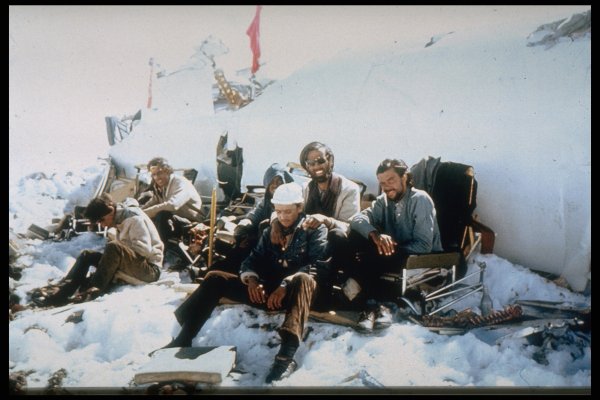
When looking at the story of a rugby team from Uruguay who crashes in the Andes mountains and turns to cannibalism to survive, many questions about the social construction of reality become apparent. Humans follow certain rules of society that, to us, our normal. Eating each other is off limits, whereas eating the meat of another animal is acceptable. Although we see the consumption of fellow humans as atrocious, when these rugby players are out in the mountains for over two months, many of these social constructions are no longer valid. They view those dead bodies as something different, once the survivors are left with few choices.

We, as human beings, have developed views and perceptions of many things that, to others, might be different. Just because we cannot understand how these sixteen people could turn to eating their own, doesn't mean that our social construction of reality would change once we were put in their shoes. Just because you cannot fathom opening up a person for surgery, that does not mean you couldn't after proper training and experience.

Tuesday, February 3, 2009

Cars, could you live without?


Several things have effected the way we live our lives in the past hundred years , but none to the extent that cars do. "The large-scale, production-line manufacturing of affordable automobiles was debuted by Ransom Olds at his Oldsmobile factory in 1902." (Wikipedia-Automobile)
We don't even think twice as we step into our metal giants and move down the streets. We don't realize the amount of convenience and comfort that these pieces of machinery provide. It seems that if you live anywhere other than a major city, you require transportation to merely go about your life. Most of us don't have a school or a grocery store or a hospital within walking distance.
Society has been developed around the assumed notion that cars will be available and people will drive them. Once the ideas of cars was assumed, we started to spread out our living spaces as our capabilities in mass transportation spread. We walk outside, turn a key, and take control of an object that can reach a speed of 100 miles per hour in less than fifteen seconds.
Since the early 1900's, we've also used design and looks to attract people. Many cars are sold for their looks rather than their efficiency. This need for cars to be socially acceptable or even to be used as a status symbol is very telling. The design of cars is very closely linked to a social aspect of life.
We take these objects for granted everyday, but without them, we would all be so very lost.

Friday, January 30, 2009

Oh, Hello.

My name is Ryan, and this silly little blog is for a class. Over the next 20 weeks, I will be posting observations and commentary on various topics that have to do with the subject of Sociology. Should be a fun ride?